Quick verdict: Punta Cana vs Aruba
- Choose Punta Cana for the widest choice of all-inclusive resorts at every budget, big family resorts with waterparks and plenty of nonstop flights.
- Choose Aruba for dry, breezy weather well south of the main hurricane belt, calm west-coast beaches and a dine-out, explore-by-car style of trip.
- Sargassum is a bigger seasonal factor in Punta Cana; Aruba is often cited among the least affected Caribbean islands.
- Punta Cana all-inclusive rates bundle food, drinks and (in the final price) taxes; Aruba stays are mostly room-only, so add meals, taxes, fees and often a rental car.
Check Punta Cana resort rates for your dates
Punta Cana vs Aruba is a classic Caribbean dilemma. Both promise white sand and turquoise water, but they deliver very different vacations. Punta Cana, on the eastern tip of the Dominican Republic, is the land of large all-inclusive resorts on long, Atlantic-facing beaches. Aruba, a small Dutch Caribbean island a short distance off the coast of Venezuela, is dry, windy and compact, and most visitors stay in room-only hotels and eat out. Below we compare weather, beaches, sargassum, hotel styles, flights, cost structure and excursions, then explain who should pick which.
We don’t quote prices we can’t verify for your dates; instead we explain what you pay for in each place. Weighing other destinations too? Read our Punta Cana vs Cancún and Punta Cana vs Jamaica comparisons.
Punta Cana vs Aruba at a glance
| Punta Cana | Aruba | |
|---|---|---|
| Location | Eastern tip of the Dominican Republic, Atlantic-facing coast | Southern Caribbean, a short distance off Venezuela |
| Climate | Tropical, humid and green; more frequent showers | Semi-arid; about 18 inches (460 mm) of rain a year; steady trade winds |
| Hurricanes | Inside the Atlantic hurricane belt (season June to November) | Well south of the main hurricane belt; direct hits are extremely rare |
| Beaches | Long sandy beaches; reef-sheltered stretches plus surfier spots | Calm leeward beaches on the west coast (Eagle Beach, Palm Beach) |
| Sargassum | Seasonal; can be heavy in big years | Usually far less affected |
| Typical stay | All-inclusive resort | Room-only hotel, timeshare or condo, dining out |
| Airport | PUJ, the Dominican Republic’s busiest | AUA, with U.S. preclearance |
| Entry paperwork | Free online e-Ticket | Online ED card plus US$20 sustainability fee |
| Tap water | Not for drinking; use bottled | Desalinated and safe to drink |
| Currency | Dominican peso; US dollars widely accepted at resorts | Aruban florin, pegged at 1.79 per US dollar; dollars widely accepted |
| Time zone | Atlantic Standard Time all year | Atlantic Standard Time all year |
Weather: is Aruba really outside the hurricane belt?
Yes. Aruba’s tourism authority places the island well south of the main Atlantic hurricane belt and calls hurricanes there extremely rare. Between June and November it can still feel side effects of storms passing to the north, such as rougher seas or a lull in the trade winds. Temperatures average 80 to 90°F (27 to 32°C) all year, annual rainfall is only about 18 inches, the short rainy season (October to December) rarely brings all-day rain, and the windiest stretch runs roughly from May to October.
Punta Cana sits inside the hurricane belt. Many seasons pass without a direct hit, but Hurricane Fiona made landfall on the Dominican Republic’s eastern tip in September 2022. Punta Cana is also more humid and greener, with more frequent, usually short showers; its driest months are generally December through April, which is also peak season. Our best time to visit Punta Cana guide has month-by-month detail.
When is each destination at its best?
Aruba’s weather is so steady that timing is mostly about price and wind: winter is high season, while summer and early fall are breezier and usually cheaper. In Punta Cana, winter and spring bring the most reliable sunshine; summer and fall are hotter, more humid and cheaper, with hurricane and sargassum risk.
Beaches and sargassum: Caribbean calm vs Atlantic breeze
Aruba’s famous beaches line the sheltered west (leeward) coast. Wide, low-rise Eagle Beach was named the Caribbean’s top beach in Tripadvisor’s 2026 Travelers’ Choice awards, and Palm Beach, just to the north, is busier, with high-rise resorts, bars and water sports. The water here is usually calm and clear, while the rugged northeast coast takes the full trade winds and is for sightseeing, not swimming.
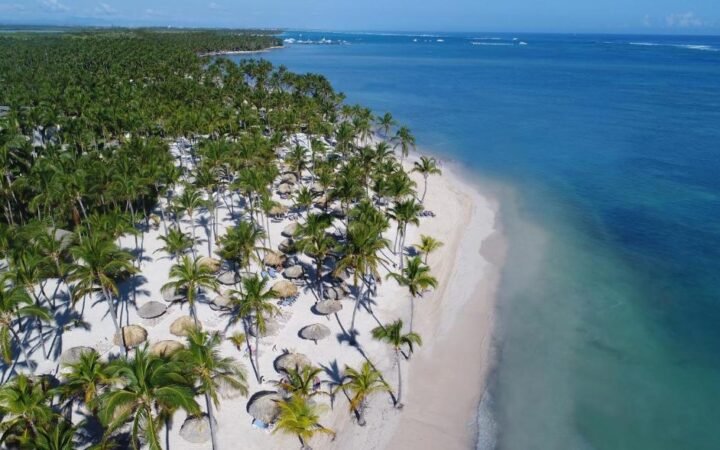
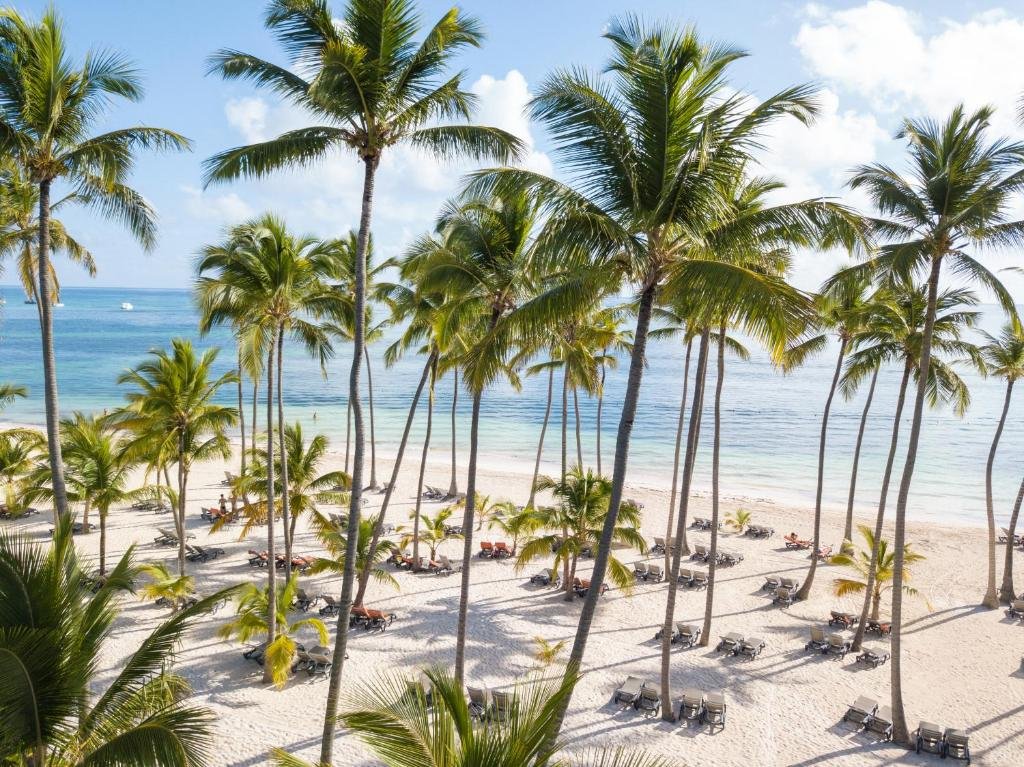
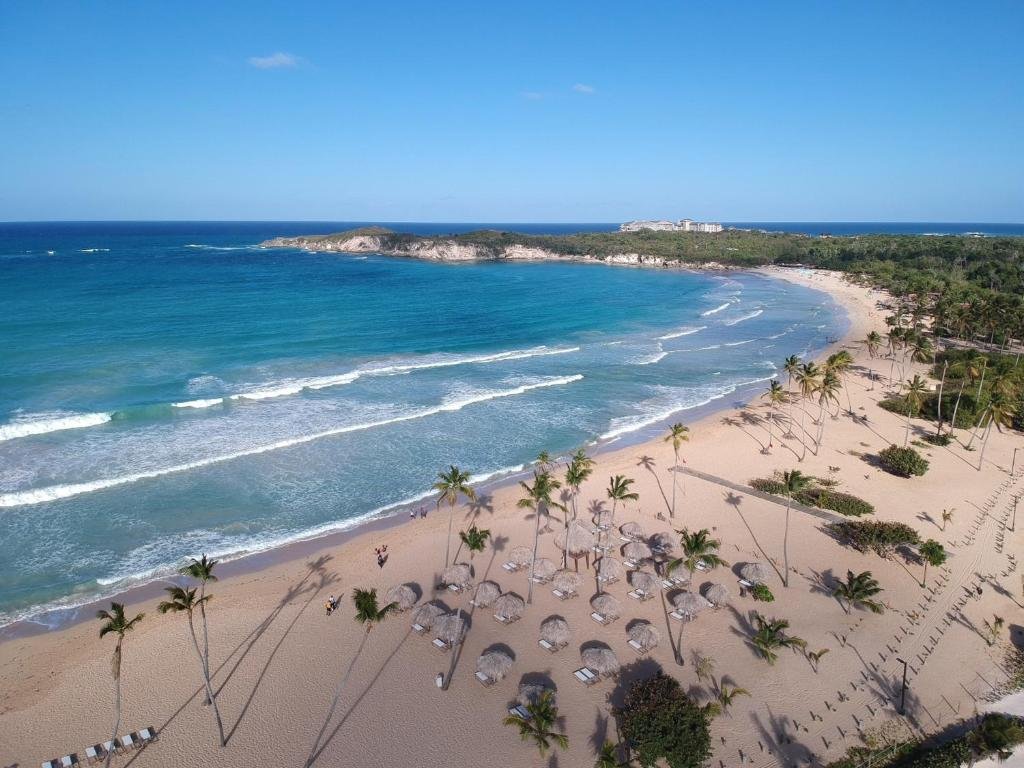
Punta Cana’s beaches run for miles along the Atlantic-facing east coast. Reef-protected stretches such as parts of Bávaro Beach and Juanillo Beach in Cap Cana are generally calm, while Macao Beach and Uvero Alto get more waves and breeze.
Sargassum is the bigger difference. Punta Cana faces the open Atlantic, where the seaweed drifts in, so in heavy years it can affect beaches from roughly spring to early fall; many resorts use floating barriers and daily cleaning, and conditions change from week to week. University of South Florida monitoring counted 9.5 million tons of sargassum across the Atlantic, Caribbean and Gulf of Mexico in January 2026 and expected another major year. Aruba lies far south and west of the main sargassum belt, and the ABC islands (Aruba, Bonaire, Curaçao) are often cited among the Caribbean’s least affected, though some seaweed can still wash up. Our Punta Cana sargassum guide shows which beaches and resorts manage it best.
Want Aruba-style calm water in Punta Cana?
Pick a resort on a reef-sheltered stretch. These three sit on some of the calmest water in the area:
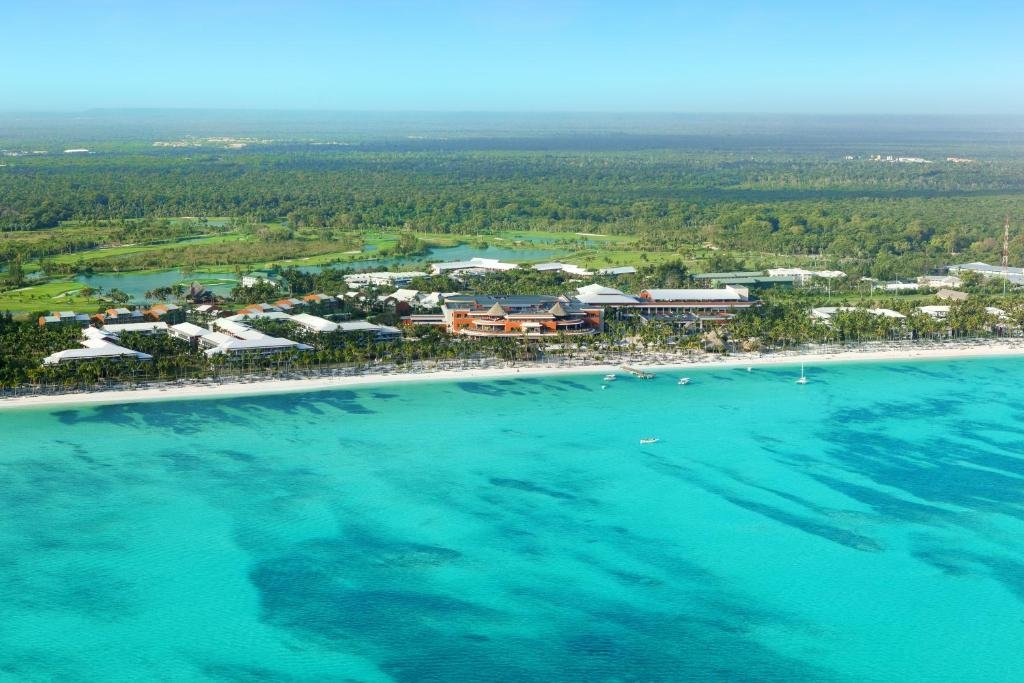
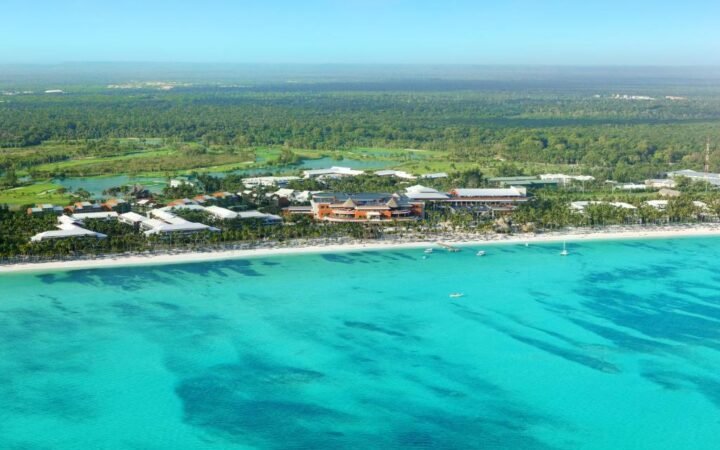
Barceló Bávaro Palace
- Sits on a generally calm, reef-sheltered stretch of Bávaro Beach
- 11 restaurants including La Comédie French, Kyoto Japanese & Santa Fe Steakhouse
- On-site 18-hole P.B. Dye ‘The Lakes’ Golf Course, 24-hour casino & bowling alley
Set on a generally calm, reef-sheltered stretch of southern Bávaro Beach, the roughly 1,400-room Barceló Bávaro Palace pairs easy ocean swimming with golf, a casino and 11 restaurants.
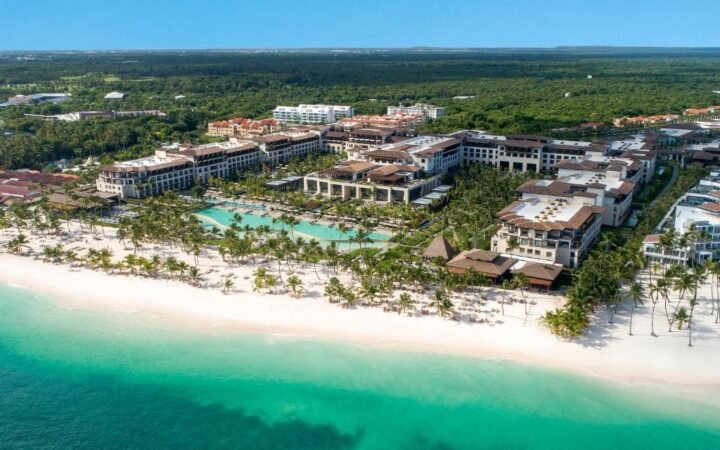
Lopesan Costa Bávaro Resort, Spa & Casino
- Iconic two-tier oceanfront infinity pool overlooking calm Bávaro Beach
- The Boulevard open-air promenade with bowling, waterpark, ice cream shop & theater
- Adults-Only Club & Unique by Lopesan VIP beach/pool areas
Opened in 2019 on a calm stretch of southern Bávaro Beach, Lopesan Costa Bávaro stands out for its sleek modern design, double-level infinity pool and open-air Boulevard village.
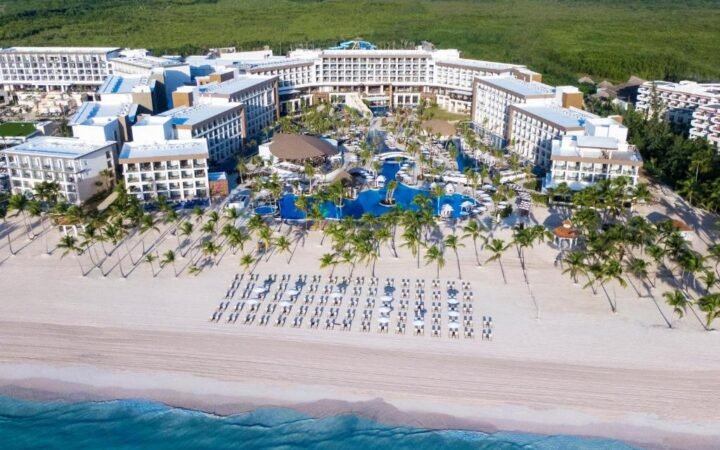
Hyatt Ziva Cap Cana
- Top-ranked family luxury all-inclusive in the Dominican Republic
- Full Canapolis Waterpark with lazy river & water cannons
- Protected Juanillo Beach with calm turquoise water
Punta Cana’s flagship five-star family all-inclusive set on gated Juanillo Beach in Cap Cana, combining gourmet dining, swim-up suites, a full waterpark and calm reef-protected waters.
All-inclusive or room-only: two different vacation styles
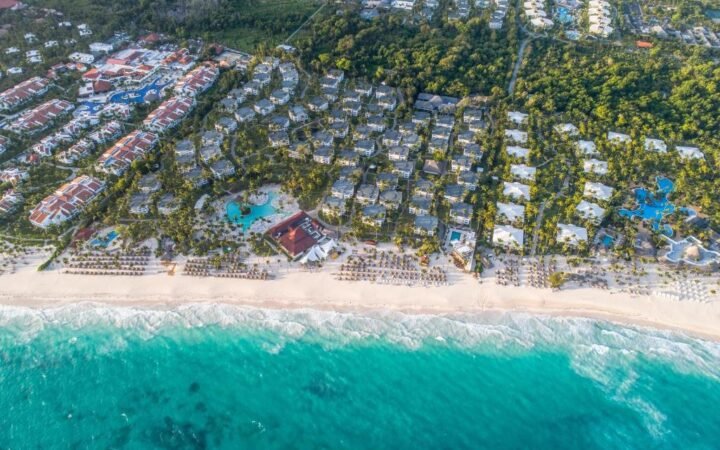
Punta Cana is built around all-inclusive resorts, from budget mega-complexes to five-star adults-only hideaways, where one nightly rate covers meals, drinks and entertainment; check that Dominican quotes include the 18% ITBIS tax and 10% service charge. It’s easy never to leave the resort, which suits families and anyone who wants a no-decisions holiday.
Aruba works the other way round. Most visitors stay in room-only hotels, timeshares or condos along Palm Beach and Eagle Beach and eat out, and the restaurant scene is one of the island’s draws. All-inclusives exist, including Riu Palace Aruba, the adults-only Riu Palace Antillas, Barceló Aruba, and Divi Aruba All Inclusive and Tamarijn Aruba All Inclusive on Druif Beach, but the choice is far smaller. Big loyalty brands such as Hyatt, Marriott, Ritz-Carlton and Hilton have Palm Beach hotels, mostly room-only. If you collect hotel points, our guide to booking a Punta Cana all-inclusive with points shows where they go furthest.
Flights: which is easier to reach?
Punta Cana International Airport (PUJ) is the Dominican Republic’s busiest airport, with more than 11 million passengers in 2025 and nonstop flights from across the United States, Canada, Europe and Latin America. Transfers range from about 15 minutes to Cap Cana to 40 or 45 minutes to Uvero Alto.
Aruba’s Queen Beatrix International Airport (AUA) is smaller but well connected, and its U.S. border preclearance lets U.S.-bound travelers clear immigration and customs before the flight home. Nonstops come from many U.S. cities (American, Delta, JetBlue, Southwest, Sun Country, United), Toronto plus seasonal Montréal and Ottawa, Amsterdam (KLM, TUI) and Latin America (Avianca, Wingo, Copa, LATAM, Aerolíneas Argentinas). The island is small, so hotel transfers are short. From New York, either destination is roughly a four- to five-hour nonstop flight.
What paperwork do you need?
The Dominican Republic requires a free online e-Ticket for arrival and departure, and the tourist card fee is normally included in your airfare; our airport transfers and e-Ticket guide walks you through it. Aruba requires every visitor to complete an online Embarkation-Disembarkation (ED) card before travel, and since July 1, 2024, air visitors also pay a US$20 sustainability fee on the same platform before airline check-in.
Cost structure: what are you actually paying for?
Prices change daily, so here is how the bill is built instead. In Punta Cana:
- The resort rate covers room, food, drinks and most activities; the 18% ITBIS and 10% service charge should be in the final price.
- Extras: airport transfer, excursions, spa, premium restaurants or club upgrades, and tips (see our taxes, tipping and hidden costs guide).
- Entry costs are small: the tourist card is usually in your airfare and the e-Ticket is free.
In Aruba:
- Hotel bills add a government room tax, a small nightly environmental levy and, at many hotels, a service charge or resort fee; check the itemized total.
- Meals and drinks are paid at restaurants and bars, unless you book an all-inclusive.
- Budget for a rental car or UTV if you want to explore; most hotels are on the west coast and Arikok National Park is on the eastern side.
- Every visitor pays the US$20 sustainability fee.
Compare like with like
Add Aruba’s room rate, taxes and fees to a realistic daily food-and-drink budget, then compare that with the final Punta Cana all-inclusive price for the same nights. Our Punta Cana trip cost breakdown shows what to budget beyond the resort rate.
Excursions: what is there to do in each?
Punta Cana’s big advantage is variety on the mainland: boat days to Saona Island, Scape Park and the Hoyo Azul cenote in Cap Cana, Los Haitises National Park, Santo Domingo’s Colonial Zone and, in winter, whale watching in Samaná Bay, plus daily catamaran-and-snorkel trips. Our best Punta Cana excursions guide ranks them.
Aruba is about exploring a small, dramatic island on your own terms. Arikok National Park covers roughly a fifth of the island, with desert trails, caves and the wild north coast; its Natural Pool (Conchi) is reached on foot, on horseback or by 4×4 or UTV. Baby Beach in the south is a shallow, calm lagoon, the Antilla shipwreck off the northwest coast draws snorkelers and divers, and the steady trade winds make Aruba a top windsurfing and kitesurfing spot. Flamingo Beach on Renaissance Island is mainly for Renaissance resort guests, with limited day passes when occupancy allows.
Safety, water and other practical differences
Aruba carries the U.S. State Department’s lowest travel advisory level (Level 1, exercise normal precautions, reissued in August 2026). The Dominican Republic has been rated Level 2, exercise increased caution, in recent advisories, mainly because of crime; most visitors stay in resort areas such as Bávaro and Cap Cana and use licensed transport. Aruba’s tap water is desalinated, and the utility, WEB Aruba, says it is safe to drink, while in Punta Cana you should drink bottled or resort-filtered water. Our Punta Cana safety and drinking water guide covers sensible precautions.
Language is easy in both. The Dominican Republic speaks Spanish, with English common at resorts; Aruba’s official languages are Dutch and Papiamento, and most people also speak English and Spanish.
Punta Cana vs Aruba: who should pick which?
Here’s how Punta Cana stacks up against Aruba:
Pros
- Far more all-inclusive resorts, from budget to ultra-luxury
- Family resorts with waterparks, kids clubs and swim-up suites
- Nonstop flights from many cities in North America, Europe and Latin America
- Varied day trips, from Saona Island to Santo Domingo
Cons
- Inside the hurricane belt, with more rain and humidity than Aruba
- Sargassum can affect beaches in heavy seasons
- Less to explore on foot outside your resort
Choose Aruba for the most dependable dry weather, very low hurricane risk, calm leeward beaches, drinkable tap water and a trip built around restaurants and exploring, if you’re happy to pay for meals separately. Choose Punta Cana for an all-inclusive at your exact budget, a family resort with waterparks, more nonstop flights or a wide menu of excursions. If calm water is what draws you to Aruba, book a reef-sheltered Punta Cana beach and travel between December and April.
Our verdict
Aruba is the safer bet for weather: dry, breezy and well south of the main hurricane belt, with calm beaches and little sargassum. Punta Cana is the better all-inclusive destination, with far more resorts and budgets, more flights and more to do beyond the beach. Couples who like to dine out and explore lean toward Aruba; families and anyone who wants everything included lean toward Punta Cana.
Frequently Asked Questions
Is Aruba better than Punta Cana?
It depends on your style. Aruba wins on dry weather, low hurricane risk, calm beaches and drinkable tap water; Punta Cana wins on all-inclusive choice, family resorts, flights and excursions.
Is Aruba outside the hurricane belt?
Yes. Aruba sits well south of the main Atlantic hurricane belt and hurricanes are extremely rare there, although passing storms can bring side effects between June and November. Punta Cana is inside the belt.
Does Aruba get sargassum like Punta Cana?
Much less often. Aruba lies far south and west of the main sargassum belt, and its resort beaches face the calm leeward side. Punta Cana’s Atlantic coast can see heavy seaweed in big years, mostly from spring to early fall.
Is Aruba more expensive than Punta Cana?
The bills are built differently. Punta Cana all-inclusive rates cover food and drinks, while most Aruba stays are room-only, with taxes, fees, restaurant meals and often a rental car on top. Compare full totals for the same dates.
What do I need to enter Aruba or the Dominican Republic?
For the Dominican Republic, complete the free online e-Ticket. For Aruba, fill in the online ED card and pay the US$20 sustainability fee before travel. Visa rules depend on your nationality, so check them before booking.